
 Sarah Beckett
2026 On-Premises Study: What's Changing in QSR In-Person Experiences
 Sarah Beckett : April 02, 2026
See how top QSR brands perform on friendliness, speed, accuracy, upselling and more in our 2026 QSR On-Premises Study.
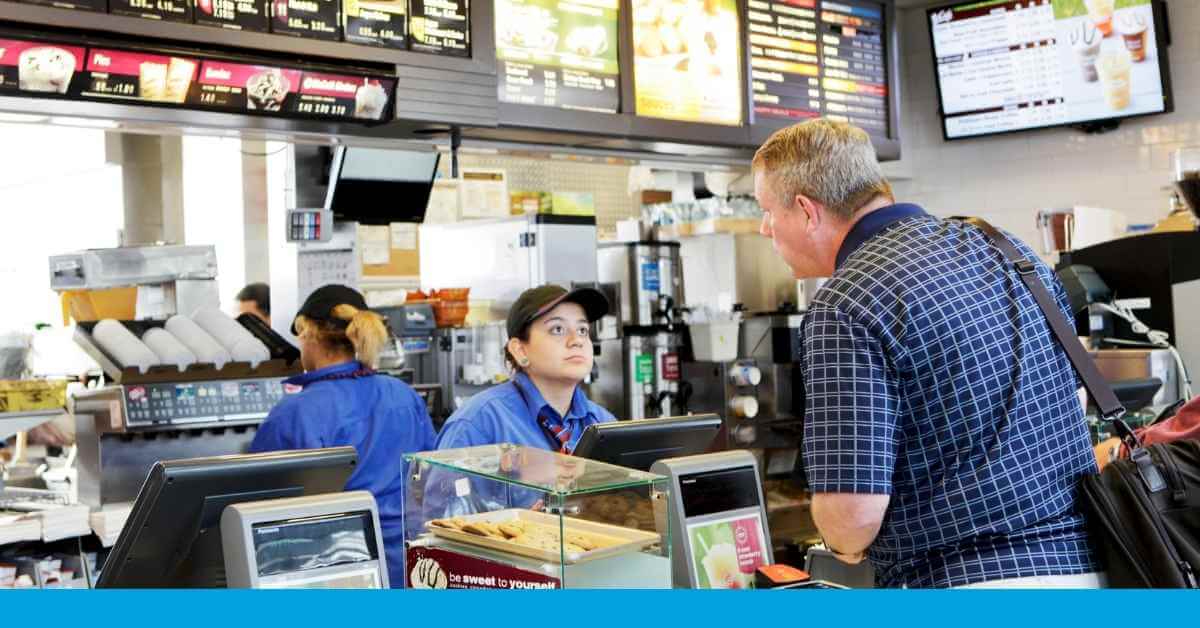
The quick service restaurant (QSR) customer experience is shaped by small, repeatable moments at the front line.
Based on Intouch Insight’s 2026 On-Premises Study, which evaluated 10 leading QSR brands across 750+ real visits, three consistent mistakes stand out.
These are not isolated issues. They are measurable behaviors that directly impact satisfaction and revenue.
Only 72.1% of guests were greeted upon entry, and just 72.6% of visits included a parting remark.
That's nearly 1 in 4 guests missing basic service behaviors at the start and end of their visit.
Friendly service cannot be discounted as it continues to be a differentiator. Any service that didn't feel friendly dropped satisfaction scores all the way down to 31.2%. It's the last thing QSR brands want in this competitive landscape.
Shopper Quotes:
"A simple 'hello' or 'I will be with you in a minute' would have gone a long way. The cashier could have smiled."
"They should be more engaging and friendly with customers. They did their job, but it was very basic compared to warm and friendly."
This is not a complex fix. It’s a low-effort behavior with high emotional impact. With the right measurement tools, you can coach staff to consistently translate those behaviors into the field —because the final moment of the visit shapes how the entire experience is remembered.
What to measure:
The study found that performance drops most noticeably during dinner, the busiest and most complex daypart.
Dinner recorded the longest total visit time (7 minutes and 4 seconds) and the lowest speed satisfaction (86.3%). At the same time, speed of service was the most cited issue (12.6%) among mystery shoppers who identified areas for improvement.
But customers don't adjust expectations based on time of day. When speed slows and no effort is made to manage the experience, satisfaction drops.
The result is a growing gap between actual speed and perceived speed.
Dinner-specific staff models, prep routines, and line management protocols are the best levers that can close this gap.
Shopper Quote:
"I arrived at a peak time. All employees looked busy and like they were working on orders. The location seemed to be short-staffed when I visited, and several of the fountain drink machine options were out of stock."
To fix these, brands need visibility into daypart performance and the ability to identify where execution falters during peak periods.
What to measure:
Suggestive selling remains one of the most unevenly executed behaviors across QSRs. The study found that it occurred in just 60.6% of visits. That's quite a bit of revenue left on the table.
Here's the performance variation across the On-Premises study brands: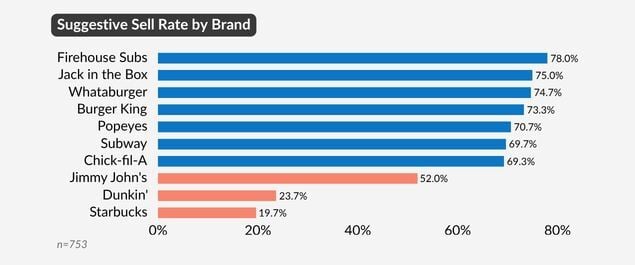
This matters because suggestive selling is not just a revenue driver. It reflects engagement at the counter. When it is missing, interactions tend to feel purely transactional.
The fix?— Measure suggestive selling behaviors and consistency across locations, shifts, and teams.
What to measure:
The brands that improve fastest are measuring execution at the frontline and connecting it directly to customer outcomes — the level of visibility you need to turn insight into coachable, actionable steps.
So…
What do your staff greetings feel like?
Which daypart and location is driving lower customer satisfaction, and why?
What are your upsell rates, and where are they falling short?
If you want clear answers to questions like these across your locations, my team can help.
Let's build the best CX Solution for your business.
 Sarah Beckett : April 02, 2026
See how top QSR brands perform on friendliness, speed, accuracy, upselling and more in our 2026 QSR On-Premises Study.
 Sarah Beckett : May 06, 2026
Emerging Experiences Study on QSR mobile order ahead: insights on reliability, pickup, ordering flow, and impact on customer satisfaction and...
 Sarah Beckett : October 06, 2025
Discover key insights & trends from our Annual Drive-Thru Study, including AI's impact on service speed, accuracy, and satisfaction across top QSR...