
 Sarah Beckett
Using Grocery Mystery Shopping Programs to Improve Customer Experience
 Sarah Beckett : May 23, 2026
Learn how grocery mystery shopping programs help multi-location chains improve customer experience and strengthen operational consistency.

Consistency is one of the hardest things to maintain in retail. Even with clear standards, two stores under the same brand can feel completely different. 500 stores? An even greater challenge.
Maybe one location greets quickly, keeps shelves full, and runs promotions the right way. Another may skip greetings, show low stock, yet deliver a unique service touch that keeps customers flowing in.
The challenge is that these moments are easy to miss. They happen in real time and disappear just as quickly. What you really need is your customer’s perspective in those exact moments.
Mystery shopping programs give you that view by sending secret shoppers through the same touchpoints your customers experience every day. Because each store is evaluated the same way, you get consistent insights that help refine execution, adjust SOPs, strengthen your CX strategy, and guide staff training.
Below are six mystery shopping programs for retail that translate daily operations into measurable performance insights and highlightable moments.
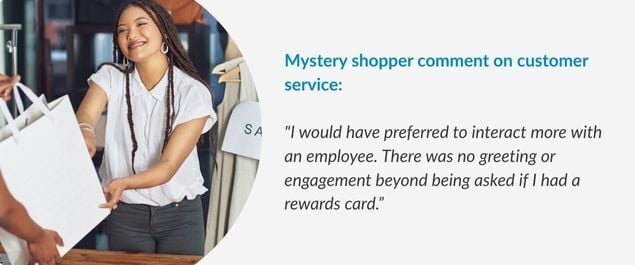
Some teams naturally create that warm, effortless experience where shoppers feel acknowledged and supported. Others hesitate, miss openings to help, or default to the basics when a little more guidance could have made the difference.
Mystery shopping captures these instances as customers experience them. They notice how quickly an associate acknowledges them, whether product information is accurate and helpful, and how naturally team members guide a purchase. They also catch small behavioral cues that influence whether a shopper is given the confidence to make a purchase.
A few examples of what this program can capture:
You invest heavily in how a store should look. The real question is how closely each location delivers on that vision day after day. Shelves shift. Displays drift. Signage falls out of sync with current campaigns. Cleanliness standards dip during peak traffic. None of this is intentional, but it shapes how customers move, decide, and buy.
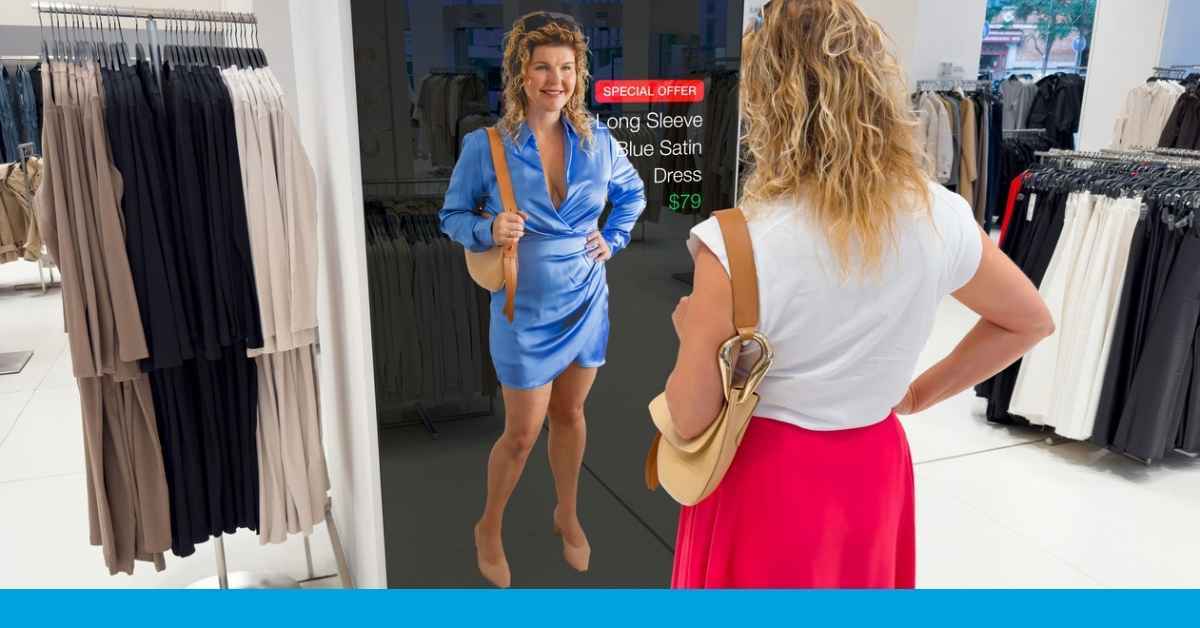
On top of that, tech is a big part of merchandising, with digital shelf labels and smart displays designed to tighten accuracy. But if a digital price doesn’t match the register, an update lags, or a display is hard to read, you need to know it quickly.
Mystery shoppers walk the store the way customers do and give you a clear read on how each location looks and how well in-store technologies hold up in real shopping conditions.
Some elements this program evaluates:
Learn more about how Intouch Insight helped boost retail merchandising for Substance Collective, a global CPG brand.
I’ve been going to the same store for the past year and always found the staff friendly, but yesterday at checkout, when I asked about a promotion, the cashier smirked and said, “If you read the signs, you’d know.” It was rude, and I was left shocked. It was a bad customer service moment, and possibly a sign that the promotion wasn’t positioned clearly in the first place.
Checkout is a high-impact moment where customers decide how they feel walking out of the store. Even well-run locations can slip here with pricing questions, return confusion, irritated customers, and a mix of small breakdowns that add up quickly. A common example is a customer noticing a higher price at the register than what was displayed on the shelf.
This is where retail mystery shopping provides clarity. Shoppers move through checkout and returns the same way your customers do, capturing how smoothly transactions run, how confidently returns are handled, and whether the parting interaction leaves a positive mark.
A few examples of what this program includes:
Did you know that 50% of Gen Z customers use scan-and-go tech? It has become a staple innovation in the retail industry.
See how you can use mystery shopping to evaluate similar retail innovations.
Your customers don’t think in channels. They think in moments. They see something online, check if it’s available, try a digital preview, place an order, and expect the pickup or delivery to be just as seamless. That is the elusive phygital experience combining physical stores and digital shopping.
More shoppers are choosing BOPIS (buy online, pick up in-store) as part of their routine, with 10.3% of e-commerce orders in North America now picked up in-store. They expect the order to be ready, correct, and waiting where you said it would be. At the same time, online returns keep climbing, with e-commerce return rates at 24.5% compared to 8.71% in-store. That means your team is handling more “I bought this online” moments than ever.
With online mystery shopping programs, you can capture these vital moments of how your promise online lines up with what happens in the store or at your customer’s doorstep.
A snapshot of what this program covers:
Promotions and pricing look clean on a strategy deck. In stores, they’re messy. A discount launches, but one location completely forgets the start date. Another rearranges a display and hides the promo sign behind the product. A third forgets to remove last week’s offer.
Pricing is even more sensitive. Customers shop with their phones out, comparing your price to the store down the street in real time. If your shelf label is wrong, or your competitor’s offer is stronger, the impact shows up in customer visits long before it shows up in your reporting.
Retail mystery shoppers give you the same perspective your customers use when deciding if your price feels fair, accurate, and worth choosing over the competitor nearby.
Some areas typically reviewed in this program:
I know someone who goes to a store and gives the cashier their loyalty card details every single visit, just to collect points. But they don’t really understand what they get in return. It’s not entirely their fault. The retailer is missing an opportunity to strengthen the relationship by not making the loyalty program easier to follow. Because once a customer understands the value, they’re far more likely to redeem offers and get the most out of the program.
According to our surveys, 72% of consumers are part of a retail loyalty program, and 56% say that a good loyalty program sways their decision on where to shop.
This is why loyalty and promotional programs rely heavily on consistent execution from frontline staff. You’ll sometimes hear a quick “Do you want to redeem points?” at checkout, but is that enough? For example, take redemption events at some retailers, where redeeming 100,000 points can earn 15% or even 30% back. When staff call out offers like that, customers immediately see the value and are more likely to engage.
These mystery shops evaluate whether associates mention loyalty opportunities, apply discounts correctly, handle redemptions smoothly, and communicate the benefits clearly.
Mystery shopping helps track how your team introduces loyalty, whether offers ring correctly, and how confidently staff walk customers through loyalty apps, rewards, and redemptions.
A few areas typically measured in this program:
Do you want a clear read on how your retail stores perform for customers? IntouchShop® gives you that visibility.
Our data also supports coaching and recognition, helping you highlight employees who deliver great experiences and identify where operations need adjustment across your network.
IntouchShop®’s mystery shopping programs measure the customer moments that matter most. Stay on brand, stay trusted, and stay consistent across every location.
 Sarah Beckett : May 23, 2026
Learn how grocery mystery shopping programs help multi-location chains improve customer experience and strengthen operational consistency.
 Sarah Beckett : November 26, 2025
See how competitive mystery shops deliver market insights that help brands refine strategy, improve decision-making, and strengthen their positioning
 Sarah Beckett : March 28, 2025
See how mystery shopping evaluates retail tech like AR, mobile checkout, and smart shelving through real customer experience insights.