
 Sarah Beckett
7 Mystery Shopping Audit Programs for QSRs
 Sarah Beckett : November 05, 2025
Discover 7 mystery shopping audit programs for QSRs to measure drive-thru, delivery, digital, loyalty, and compliance performance with IntouchShop®
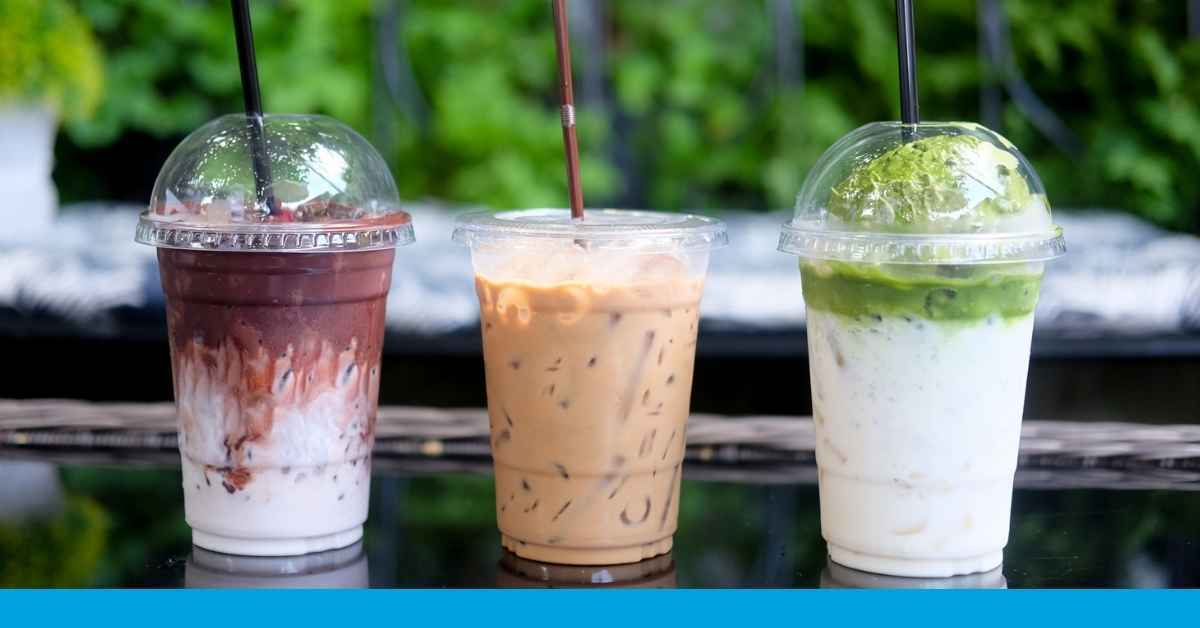
Beverage trends are changing fast because drinks now do more than round out a meal. Specialty drinks can create a treat moment, pull a customer into an afternoon visit, make a loyalty offer feel more personal, and give guests a reason to choose one brand over another.
In our 2026 Specialty Beverage Opinions survey of 1,289 consumers, the clearest beverage consumption trend was that people aren't only buying drinks because they are thirsty. They are buying them because the right drink feels like a small reward. That is why today's beverage strategy should treat specialty drinks as affordable indulgences, not just add-ons to a meal.
The top beverage trends in 2026 are treat-based purchasing, refreshing taste, value for the price, new and interesting flavors, customizable beverages, functional benefits, and promotions that make trial feel low-risk. For operators, the opportunity is turning specialty beverage trends into repeatable execution across stores, apps, loyalty programs, and service channels.
Four trends stand out from the data:
It's all about the word "treat". It tells operators that specialty beverages sit in a different mental category than routine fountain drinks or basic coffee. They are small luxuries customers can justify on a workday, during an errand, after school pickup, or on a weekend run.
In our survey, 57% of consumers said treating themselves was the main reason they buy specialty drinks. That was far ahead of energy or caffeine at 12%, cooling down or feeling refreshed at 11%, and trying a new flavor at 4%.
This doesn't make caffeine, refreshment, or novelty unimportant. It means they work best when they serve the bigger emotional job: giving customers a drink that feels worth the stop.
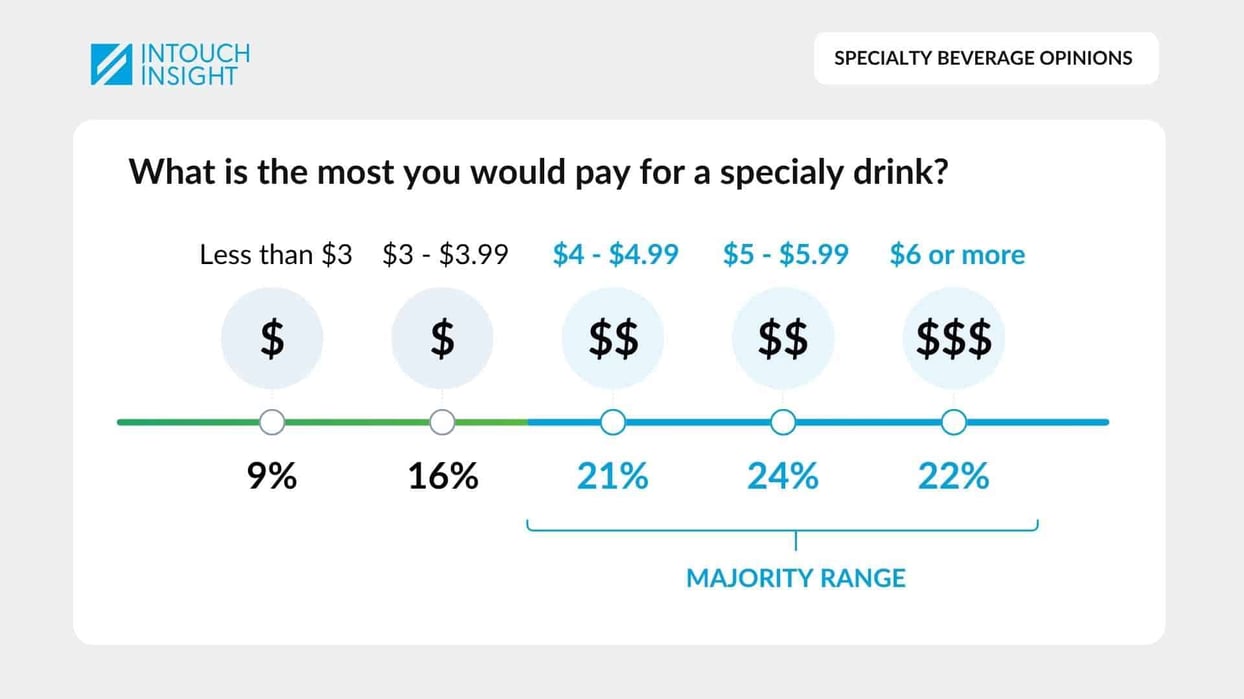
Price matters too, but consumers aren't looking only for the cheapest option. Our survey shows that most are comfortable paying for specialty drinks when the drink feels like a worthwhile treat. In fact, 67% of respondents said they would typically spend at least $4 on a specialty drink, with the largest share falling between $5 and $5.99.
For multi-location brands that position their drinks as affordable treats, we ask: does the in-store experience feel like a treat as well? The answer depends on more than the recipe. It depends on menu visibility, speed, accuracy, friendliness, customization, cup presentation, and whether the promotion the customer saw is easy to redeem.
The top three things consumers look for in a specialty drink are refreshing taste at 54%, good value for the price at 50%, and new or interesting flavors at 40%. That is a useful menu-development filter because it balances creativity with restraint and connects directly to beverage flavor trends.
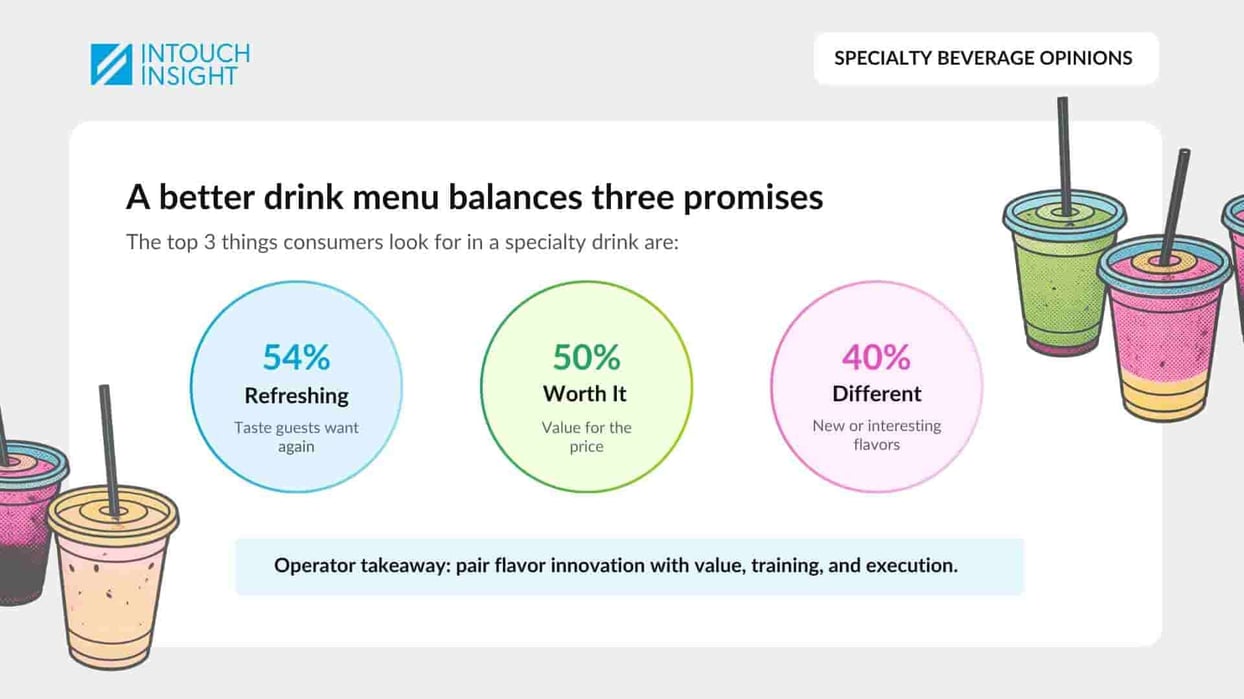
A beverage program can chase novelty every month and still miss if the drink isn't refreshing or feels overpriced. A brand can also offer a great value and still lose attention if the menu feels predictable. The strongest programs tend to make three promises at once: this tastes good, this feels worth it, and this gives you something a little different from your default order.
The broader food & beverage trends market is moving in the same direction. Perfect Daily Grind's 2026 coffee shop trends point to matcha, global flavors, seasonal items, and customization as major menu forces. Keurig Dr Pepper's State of Beverages report highlights younger consumers rotating across beverage categories and seeking function-forward choices, which is why beverage category trends increasingly matter across restaurants, c-stores, coffee brands, and CPG. The National Restaurant Association also identifies energy drinks, low- and no-alcohol beverages, and personalized hydration as 2026 functional beverages.
The takeaway for operators is that beverage innovation needs an execution plan before it needs another flavor brainstorm.
Specialty beverages invite experimentation, but customers still want a reason to take the first sip. In our survey, 71% of consumers said a discount or deal would make them more likely to try a new specialty beverage. Free samples followed at 61%, and loyalty points or app offers came in at 48%. For restaurant beverage programs, that makes promotion design as important as flavor design.
That gives marketers and operators three strong levers:
Promotions also create measurable operational moments. The offer needs to be visible on the menu board, understood by employees, applied correctly in the app, timed well for sampling, and prepared consistently from one location to the next.
A beverage promotion can generate attention quickly. Consistent execution is what turns that attention into repeat visits.
One of the clearest beverage industry trends is that drinks can create their own visit occasions. When a customer thinks "I want something refreshing," "I need an afternoon treat," or "I want to try that new flavor," the brand that owns that moment has a traffic advantage.
The brand data in our survey supports that larger trend. When consumers were asked where they first think of going for a specialty drink, Starbucks led at 40%. That is a powerful awareness advantage, but the takeaway isn't about one brand alone. It shows how strongly a beverage program can become associated with a specific customer occasion.
The rest of the responses show room for competition. Dunkin' followed at 9%, a convenience store and McDonald's each drew 6%, Sonic reached 5%, Dutch Bros and grocery stores each reached 4%, and several other brands appeared in smaller shares.
For operators outside the leading coffee chain, the goal isn't to copy Starbucks. It is to create a beverage reason that fits the brand's own customer mission. A c-store can win on customization and convenience. A QSR can win on a meal-plus-drink bundle. A casual dining brand can get the upper hand with premium non-alcoholic options.
Our 2026 C-Store Trends Report shows why this matters beyond coffee. The report found that beverage programs are becoming traffic drivers, with customers increasingly expecting beverage customization options like flavor shots, custom ice, drink mixing, cold foam, sweet cream toppings, and personalized offers.
The best drinks programs turn current beverage trends into habits. That takes more than a launch calendar. It takes a measurable operating system for how the drink is promoted, sold, made, handed off, and improved.
Use this five-part framework:
Restaurant Dive's beverage innovation coverage makes a similar point from the operator side: beverages can create occasions and help brands stand apart, especially when the drink feels experiential and well-crafted. The risk is that complexity grows with every new flavor, topping, app offer, or limited-time build.
Specialty beverages are full of promise. But such programs can look strong on paper and still break down in the customer journey. Here are the most useful moments to measure in any beverage program:
This is where mystery shopping is especially useful. IntouchShop® mystery shopping services gives brands an objective, location-level view of whether beverage standards are being followed in real customer scenarios. For specialty drinks, that can includes everything above, and more.
Use mystery shopping to see whether your specialty drink strategy is easy to find, easy to order, correctly prepared, and consistently worth the visit.
Interested? Reach out to us below ↓
 Sarah Beckett : November 05, 2025
Discover 7 mystery shopping audit programs for QSRs to measure drive-thru, delivery, digital, loyalty, and compliance performance with IntouchShop®
 Sarah Beckett : May 13, 2025
Explore how Voice AI drive-thru tech is changing QSRs—faster orders, smoother ops, and a real test of what makes a great guest experience.
 Sarah Beckett : October 17, 2025
QSR drive-thru traffic is evolving. See how customer habits, AI tools, and service speeds are redefining performance in the latest drive-thru study.