
 Sarah Beckett
Retail Stocking Procedures: 5 Steps to Faster, Fuller Shelves
 Sarah Beckett : September 04, 2026
Build faster, safer retail stocking procedures with five practical steps for replenishment, shelf availability, planogram compliance, and...
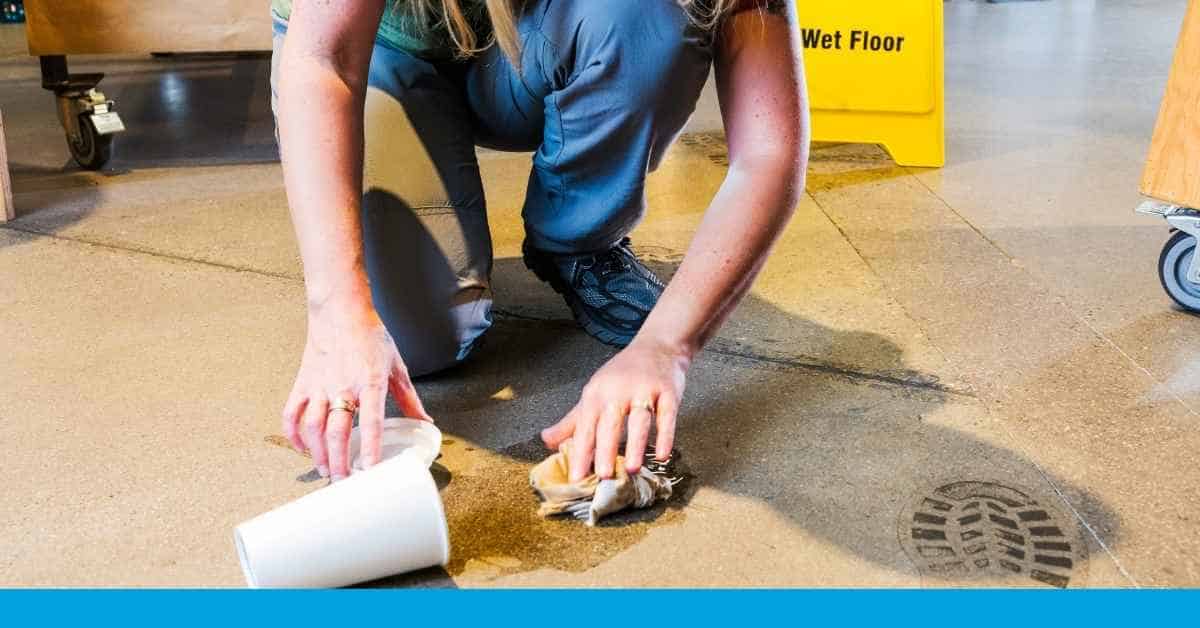
To improve floor safety and reduce slip-and-fall risk, retailers need a way to ensure inspections happen as scheduled, verify conditions with clear evidence, respond quickly when hazards are identified, and maintain a documented record of follow-through across every location.
It’s 5:30 p.m. and your stores are packed. Checkout lines are backing up, and your floor staff are running ragged trying to keep up. Meanwhile, a spilled liquid in an aisle or tracked in water from the rain outside is waiting to turn into a massive legal nightmare.
Keeping floors clean and dry isn't just about store appearance. It's about protecting the bottom line. Look at the numbers: over half of all general liability claims against retail operations stem from slip-and-fall incidents. If you're operating on tight net profit margins, a single $100,000 settlement means your chain has to rack up millions in extra top-line sales just to break even.
Retail floor safety may sound simple, but managing it consistently across hundreds of shifts, departments, and high-traffic locations is in truth, a herculean task…without the right system in place.
Now imagine how much harder it becomes tracking all that with just paper sweep logs and simple spreadsheets.
That's exactly why smart retail operators, from big-box giants and home improvement warehouses to grocery stores, national pharmacies, and discount retailers, are adopting digital floor safety programs designed to improve accountability, consistency, and documentation.
Slip-and-fall hazards happen in the blink of an eye. It might be a broken bottle in a grocery aisle, tracking rain right into a main entrance, or a leaky fixture. The real issue isn't just that the hazard existed—it's whether your team can prove they did something about it.
In court, everything hinges on "constructive notice." Essentially, lawyers will argue that your store should have known about the hazard through regular, reasonable inspections.
This is where paper logs or spreadsheet entries fail you completely. They don't prove a sweep actually happened, whether conditions were observed, or whether corrective actions were taken. It's too easy for a busy employee to quickly fill out a checklist at the end of a shift, checking off hours of work they never actually did.
Ultimately, if you can't verify the data, you don't have a defense.
The reality is that safety risks aren't static. Conditions change throughout the day, making it difficult for traditional inspection methods to keep pace. And the larger the operation, the harder floor safety becomes.
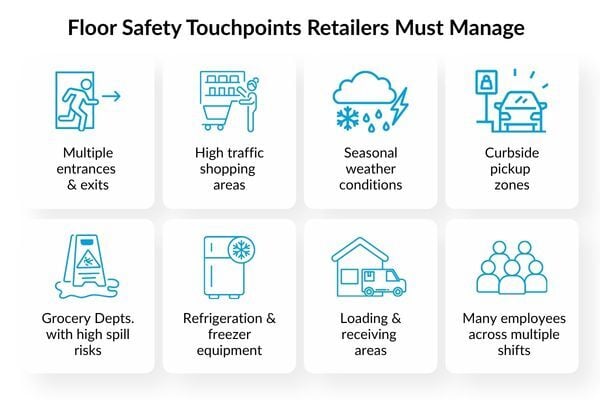
To protect your business, you need to shift from passive paper to an active digital checklist system designed for real-world execution. A modern digital compliance strategy fundamentally changes how your team behaves on the floor.
When you deploy a digital framework, you gain capabilities that traditional checklists simply can't provide:
One of the biggest weaknesses of paper logs is that inspections can be completed all at once rather than throughout the day. Scheduled and recurring floor safety checks help ensure inspections happen at the intervals they're intended to, creating a stronger record of ongoing safety activity instead of a checklist filled out after the fact.
A smart digital system randomizes checklist questions on the fly. This challenges pattern answering or blind acceptance, forcing employees to actually look at what they're inspecting instead of clicking through from memory.
Every single action taken on the floor is instantly timestamped and tagged with real-time GPS data. You'll know exactly when and where a hazard was noted, creating a documented record of inspection activity that can help demonstrate reasonable efforts to maintain safe conditions.
You can enforce mandatory image capture on critical safety elements, like confirming an entrance mat is lying flat or a high-risk zone is completely dry. These photos are securely archived and protected from alteration, helping create a stronger visual record of conditions at the time of inspection.
New risks don't wait for the next training session. When a recurring concern emerges, inspection requirements can be updated and deployed across every location immediately, ensuring every store is responding to the same risk using the same standards.
If a safety check fails or a required inspection is missed, notifications can be sent directly to the appropriate managers with the details they need to investigate, assign corrective action, and track resolution.
A well-designed digital platform shouldn't require you to reinvest in expensive new hardware. Access is available via an app across all desktops, laptops, smart devices, and mobile phones, meaning your team can use the equipment they already have in their pockets.
The first few minutes after an incident can be the most important. Security footage may need to be preserved. Photos may need to be collected. Managers may need to document what happened while details are still fresh.
When critical evidence goes missing, retailers can face legal challenges beyond the original incident. Allegations of spoliation can arise when footage, photos, or records cannot be produced later. In some cases, courts may even allow an adverse inference, meaning a jury can assume the missing evidence would have been unfavorable to the retailer.
Automated workflows help ensure critical information is captured and preserved before it can be lost.
Reducing slip-and-fall risk is the immediate goal. But the impact of a well-executed floor safety program extends far beyond incident prevention.
Think about the customer experience.
A pristine, hazard-free environment influences how long customers stay, how comfortable they feel while shopping, and ultimately how likely they are to return. Safe, clean aisles can increase dwell time, strengthen customer satisfaction, and reinforce trust in your brand.
The same processes that help retailers identify and address safety risks can also support other operational priorities, including:
Building a digital system like this from scratch sounds like an operational headache. You don't have to piece it together yourself.
That's exactly why Intouch Insight built IntouchCheck®.
IntouchCheck® is a mobile platform that helps you move beyond paper logs and disconnected processes with scheduled inspections, photo verification, location-aware checklists, incident workflows, and enterprise-wide visibility—before safety issues impact your bottom line.
At the end of the day, clean and safe stores build customer trust, and that trust directly translates to longer shopping trips, bigger baskets, and protected margins.
Stop relying on assumptions and paper trails that fail when you need them most.
Ready to see what better frontline visibility can reveal across your stores? Connect with us and let's talk about IntouchCheck®. ↓
 Sarah Beckett : September 04, 2026
Build faster, safer retail stocking procedures with five practical steps for replenishment, shelf availability, planogram compliance, and...

Learn how using mobile forms can improve your retail operations in three ways.
Why are routine inspections important for multi-location brands? Exploring the benefits and strategies to elevate your inspections!