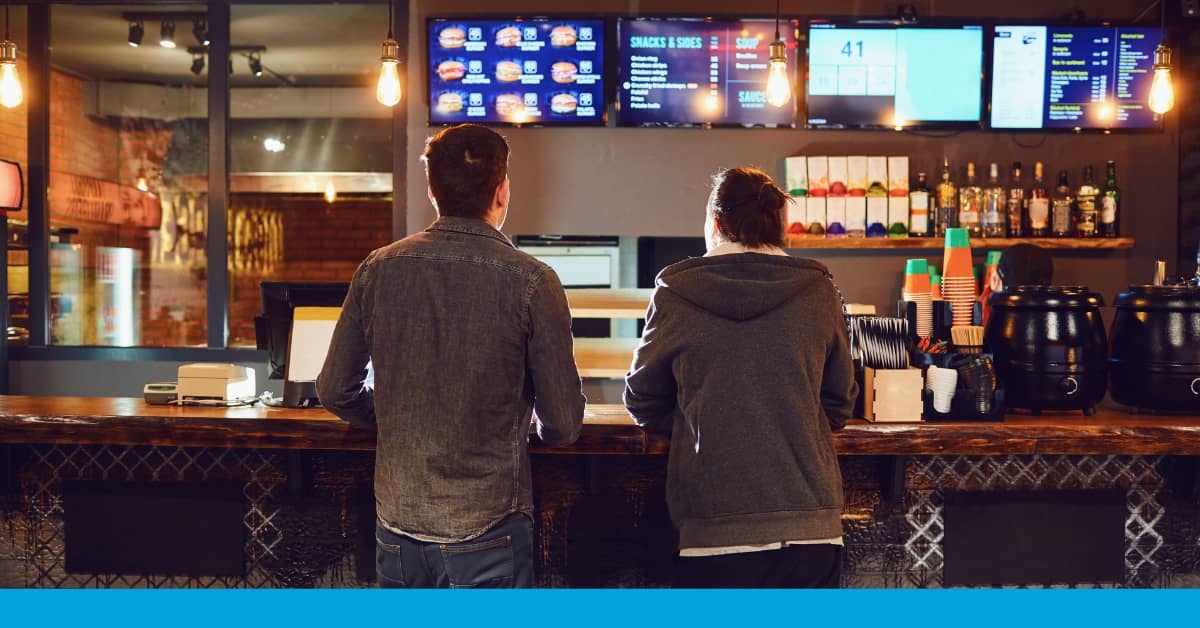
Imagine this: Peter is hungry after a long day and wants something quick, satisfying, and easy. He checks a restaurant’s menu on his phone, places a customized order, drives to the location, waits for his name, opens the bag, and takes the first bite. Yes, a standard step by step process with different moments. But together, they decide whether he leaves happy or starts looking for somewhere else to eat next time.
That is why learning how to improve customer satisfaction in restaurants starts with the guest journey. Peter doesn't experience a strategy document or a quarterly score. He experiences a series of small moments: what he sees, how long he waits, whether the order is right, and how the team responds when something goes wrong.
How to improve customer satisfaction in restaurants
To improve customer satisfaction in restaurants, follow the visit moment by moment. Define what a good experience should look like, measure the behaviors customers can actually see, and fix the gaps that repeat by location and daypart. For Peter, that means clear information, a warm welcome, an accurate order, quality food, honest updates, and helpful recovery when the visit goes off track.
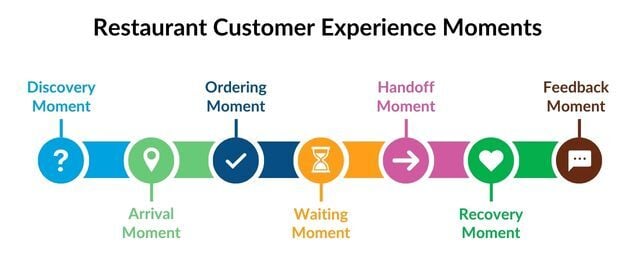
This blog explores 7 key moments that shape customer satisfaction in restaurants and how operators can manage them at each touchpoint.
- The Discovery Moment
- The Arrival Moment
- The Ordering Moment
- The Waiting Moment
- The Handoff Moment
- The Recovery Moment
- The Feedback Moment
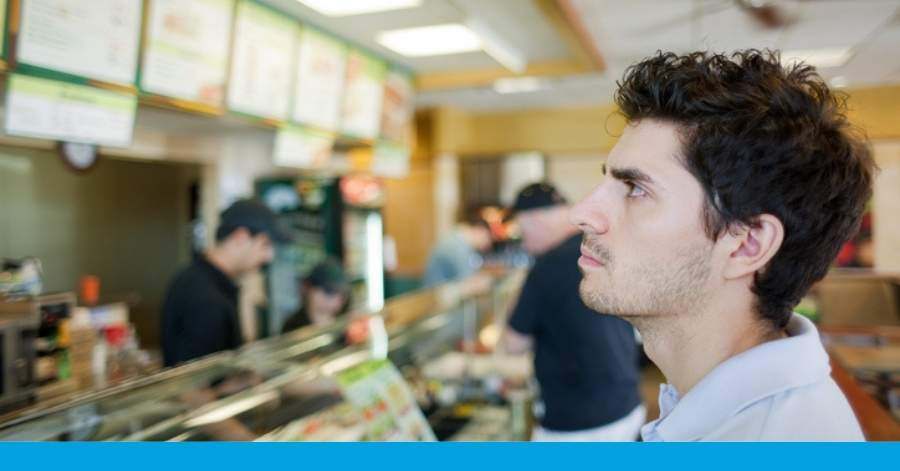
Peter starts where many hungry customers do: on his phone. He checks the hours, scans the menu, looks at photos, compares prices, and decides whether pickup or delivery will fit his evening. If the menu is outdated, the ordering link is broken, or the fees appear at the last second, frustration starts before he has ordered a thing.
Customer satisfaction starts before anyone enters the restaurant. Search listings, menus, prices, hours, delivery availability, and estimated times all set a promise. When those details are clear, Peter knows what to expect. When they conflict, the visit begins with doubt.
Value also shapes this moment. According to a 2026 McKinsey study, poor food quality (57%) and small portion sizes (55%) were the top reasons U.S. consumers walk away from a restaurant visit feeling they didn’t get good value. A polished listing can't compensate for a weak product, but clear information helps customers choose with realistic expectations.
- Keep hours, menus, pricing, location details, dietary information, and ordering links current everywhere customers find you.
- Use recent, representative photos and plain-language menu descriptions.
- Make pickup, delivery, dine-in, and drive-thru options obvious before checkout.
- Show fees, substitutions, unavailable items, and fulfillment estimates before the customer commits.
- Compare what each channel promises with what the location can reliably deliver.
For multi-location brands, audit listings and ordering paths by market. One outdated menu or broken link can lose Peter before the restaurant team gets a chance to welcome him.
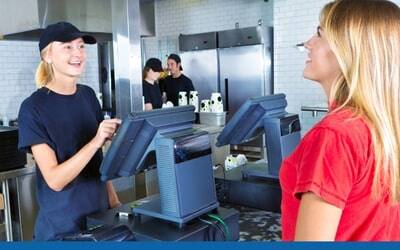
Peter arrives at the restaurant expecting a quick pickup. Instead, he sees two doors, three possible lines, and no sign telling him where mobile orders are collected. He steps inside, looks around, and waits for someone to notice him. A simple “Hi, we’ll be right with you” would change the feeling of that moment.
Arrival is where the promise on the phone screen meets the real location. A clean entrance, obvious pickup path, and quick acknowledgment tell Peter the team has things under control. Confusing signs, neglected tables, or silence from a busy counter make him wonder whether the rest of the visit will be just as uncertain.
Human acknowledgment matters even when the customer isn't ready to order. In our 2026 On-Premises Study, 27.9% of guests weren't greeted or acknowledged on entry. The same research found that friendly visits reached 98.9% overall satisfaction, compared with 87.1% for neutral service and 31.2% for service rated not friendly.
Those numbers make the greeting more than a courtesy. It tells Peter he has been seen and help is coming, even if the team can't serve him that second.
- Set a time-to-acknowledgment standard, even when the team is busy.
- Make the order, pickup, kiosk, restroom, and seating paths easy to understand.
- Maintain an inspection checklist for entrances, counters, tables, beverage stations, and waste bins throughout the day.
- Give mobile pickup customers a clear place to stand and a simple way to ask for help.
- Coach observable behaviors: eye contact, a greeting, a calm tone, and a clear next step.
Our review of three QSR customer experience mistakes shows why greetings, peak-period execution, and consistent frontline behaviors deserve location-level measurement.
Peter wants his sandwich without onions and his drink with light ice. The kiosk shows plenty of choices, but the modifier screen is hard to follow. He taps back, loses part of the order, and starts again. By the time he reaches payment, a simple lunch already feels like work.
The ordering moment asks customers to make several decisions quickly: what to buy, how to customize it, which offer applies, how much it costs, and how to pay. Peter feels more confident when the process is easy to understand and he can check the details before submitting the order.
Technology can remove friction when it fits the occasion. The National Restaurant Association’s 2025 industry report found that ordering and payment technology mattered to 53% of limited-service customers and 75% of delivery customers when choosing where to order. You need to use technology to make the transaction easier, then preserve a path to human help.
- Organize menu boards, kiosks, and apps around the way customers decide, with clear modifiers and prices.
- Confirm the order, name, fulfillment channel, and special requests before payment.
- Test common customizations instead of only testing the simplest purchase path.
- Explain unavailable items and substitutions before the customer reaches the final step.
- Offer familiar, reliable payment methods and a visible way to recover from a failed transaction.
- Give employees a simple escalation path when a kiosk, app, coupon, or loyalty account doesn't work.
Peter’s confirmation said his order would be ready at 6:20. It is now 6:28, the pickup shelf is empty, and the order-status screen hasn't changed. He can see the team working, but he has no idea whether his food is being packed or whether the order was missed.
A wait feels longer when customers don't know what is happening. Restaurants should reduce actual wait time, of course, but an honest update can keep a delay from feeling careless. “Peter, we’re finishing your order now. It’ll be about four more minutes” gives him something uncertainty never does: a clear expectation.
Our 2026 On-Premises Study found that when speed felt as expected or faster, overall satisfaction was 96.7%. When it felt slower than expected, satisfaction fell to 76.9%, regardless of the precise time on the clock.
- Set quoted times from actual location and daypart performance, not an ideal average.
- Acknowledge delays before customers need to ask.
- Keep order-status screens, app notifications, and verbal updates consistent.
- Measure both elapsed time and whether the customer believed the time was reasonable.
- Review outliers by shift to find staffing, prep, equipment, and workflow causes.
Peter finally hears his name. The employee places a sealed bag on the counter, but no one confirms the drink or the special request. He gets to the car, opens the bag, and finds onions on the sandwich and no straw. Guess what? His frustration has just found a second life.
At handoff, all the restaurant’s work becomes visible at once. Peter checks whether the order is complete, the customization is right, the packaging is secure, and the interaction feels courteous. Then the first bite confirms temperature, taste, freshness, and value.
In our 2026 on-premises research of restaurants, roughly 1 in 13 orders still contained an error, missing item, or incorrectly fulfilled request. For temperature at handoff, satisfaction ratings were 95.2% when food temperature met expectations, but dropped to 78.9% when it didn't.
- Verify the customer name, order, beverages, sauces, utensils, and special requests.
- Use a repeatable bag-sealing and item-check process without slowing the line unnecessarily.
- Design packaging and staging around temperature, hold time, and travel distance.
- Confirm where the customer should go if something is missing or incorrect.
- Finish with eye contact, a thank-you, and a clear closing remark.
- Track accuracy and food quality by channel, daypart, item, and location.
Restaurant customer experience is also heavily about the service levels at handoff.
For delivery-heavy brands, our analysis of how third-party delivery affects customer satisfaction shows how timing, temperature, tracking, and fulfillment ownership shape the final experience. For pickup and carryout, our research into how friendly service affects repeat orders demonstrates why a brief human interaction still carries weight at a fast handoff.
Peter heads back inside and explains the mistake. This is the moment when a disappointing visit can either get worse or turn around. If the employee listens, apologizes, and quickly replaces the sandwich, Peter may leave remembering that the team cared enough to fix it. If he has to repeat the story to three people, that error becomes the whole experience.
Mistakes happen. The recovery moment determines whether Peter remembers the problem or the way the team handled it. Strong recovery is fast, specific, proportionate, and easy for employees to deliver.
A restaurant should define which issues frontline employees can resolve immediately and which require a manager. If every refund, remake, or credit needs a long approval chain, the customer absorbs more effort after the restaurant has already disappointed them.
- Acknowledge: Listen without interruption and restate the issue clearly.
- Resolve: Offer the most appropriate fix, such as a correction, remake, refund, replacement, or realistic new time.
- Confirm: Ask whether the solution addresses the problem and explain what will happen next.
- Learn: Tag the cause so the brand can see repeated failures by item, channel, shift, or location.
Train teams with realistic scenarios: Peter’s incorrect customization, a missing delivery item, an allergy-related concern, a coupon failure, or a long unexplained wait. Then measure recovery time, customer effort, repeat contacts, and satisfaction after resolution.
Later that evening, Peter receives a two-question survey. The request arrives while the details are still fresh, so he mentions the confusing pickup area, the missing straw, and the employee who handled the remake well. His response contains three useful signals: one journey problem, one accuracy problem, and one recovery win worth reinforcing.
Feedback is the bridge between Peter’s experience and a system-wide improvement. Ask close enough to the visit that the details are fresh, keep the survey short, and connect responses to the location, channel, order, and time whenever privacy and consent requirements allow.
Use a restaurant customer satisfaction survey to hear what customers felt. Pair it with operational data and objective mystery shopping across customer touchpoints to see whether service standards were executed. These methods answer different questions, and together they provide a fuller picture.
- Trigger a brief survey after the visit or transaction, with one open-text question for context.
- Route urgent or low-scoring responses to a clear owner.
- Respond to reviews in a timely, specific, and human way.
- Group comments by moment: discovery, arrival, ordering, wait, handoff, meal, recovery, and follow-up.
- Share recurring themes with operators and frontline teams in plain language.
- Tell customers when their feedback leads to a visible change.
Improve the moments your customers remember
Great restaurant customer experience comes from measured consistency. Define the experience you want, measure whether it happens, and give local teams a clear way to correct the gaps.
Start with one channel and one high-impact moment. For a drive-thru, that may be order confirmation or the window handoff. For mobile pickup, it may be readiness and acknowledgment. For dine-in, it may be arrival, table touchpoints, or payment. Once the team can see where customers like Peter get stuck and connect that gap to a behavior, improvement becomes easy.
To improve customer satisfaction in restaurants you need to measure what matters most. Intouch Insight’s multiple CX solutions can help you do exactly that.
Interested? Fill the form below and talk to a CX expert.

 Sarah Beckett
 Sarah Beckett : June 25, 2026